The Paper Trail: How a Developer Used State Power to Override Fire Safety in Cupertino’s Wildfire Zone
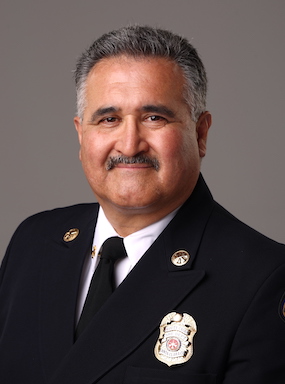
On April 1, Assistant Fire Chief Hector Estrada, described, without embellishment, the limited scope of his department’s review — and in doing so, exposed how others had mischaracterized that review to force approval of 51 townhomes in a Very High Fire Hazard Severity Zone. How did the state get misled — and who controlled the information?
Cupertino Facts • April 2026
This is Part 1 of a three-part investigation into the Evulich Court project approval.
- Part 1: The Paper Trail — The full story of how incomplete information flowed from city staff to HCD to the developer’s lawyers, and how the Fire Chief’s straightforward testimony exposed the gap. (You are here)
- Part 2: The Risks Residents Face — Evacuation gridlock, flawed studies, and what the city’s own data says about the danger to Linda Vista families.
- Part 3: The Architecture of Approval — Staff misdirection, the developer’s legal strategy, and the circular argument that silenced safety concerns.
Previously: Who Is Responsible for Fire Safety at Evulich Court? Nobody, Apparently.
The Vote
On the evening of April 1, 2026, the Cupertino City Council voted 4-1 to approve a 51-unit luxury townhome development by Summerhill Homes at 10857 Linda Vista Drive — a 2.53-acre site in the city’s recently designated Very High Fire Hazard Severity Zone. The proposal asked to reduce the mandatory 30-foot wildfire setback to just 10 feet along property lines shared with existing 1950s-era homes.
The sole dissenting vote came from Council Member R. “Ray” Wang, who posed a question that hung over the chamber: “What’s the consequences if we allow 800 residents to be in a severe fire with no evacuation routes?”
Mayor Kitty Moore, who voted to approve, offered her own assessment before casting her vote: “My frank opinion of this is that this is not a good design at all.”
If four of five council members had misgivings about safety, why did the project pass?
The answer lies in a paper trail that runs from Cupertino City Hall to Sacramento and back — a chain of incomplete information, legal threats, and a state agency letter that, by the time the council voted, had made the outcome all but inevitable.
Why This Site Is Different: The Regulatory Framework
To understand what happened, it helps to understand the laws that are supposed to govern development in wildfire zones. The California Environmental Quality Act (CEQA) requires environmental review before most development projects can be approved — an analysis of impacts including traffic, noise, air quality, and natural hazards like wildfire and seismic risk. That review is the public’s primary tool for ensuring that safety concerns are evaluated before a project breaks ground.
AB 130, a housing streamlining law, allows certain infill projects to bypass CEQA review. But the Legislature recognized the danger of skipping environmental review in fire-prone areas: AB 130 specifically excludes projects in a Very High Fire Hazard Severity Zone (VHFHSZ) — unless the developer can demonstrate compliance with the state’s fire safety regulations. Those regulations have two parts. PRC § 4290 sets structural standards including a mandatory 30-foot defensible space setback between new construction and adjacent properties. PRC § 4291 and its local equivalent, Government Code § 51182, require up to 100 feet of defensible space clearance around structures — vegetation management, fuel reduction, and maintenance of the buffer zone that gives firefighters room to work and residents time to evacuate. Critically, the most intensive defensible space zone extends 30 feet from the structure — the same distance as the § 4290 setback.
Reduce the setback, and the defensible space becomes physically impossible to maintain.
The Evulich Court project sits in the VHFHSZ. The law gave Summerhill a clear choice.
- If the developer wanted to bypass CEQA under AB 130, it needed to maintain the 30-foot setbacks and demonstrate full compliance with fire safety regulations — the trade-off the Legislature struck for skipping environmental review in a wildfire zone.
- Alternatively, if the developer wanted to reduce setbacks below 30 feet, it could seek an exception — but it would need to go through CEQA, the environmental review process designed to ensure that fire safety, evacuation capacity, and neighbor impacts are evaluated before the project is approved.
What Summerhill got was neither path. It obtained an exception reducing the setback to as little as 10 feet and bypassed CEQA entirely.
Reduced safety buffers with no environmental review — in a Very High Fire Hazard Severity Zone, a few hundred feet from an active fault line. The question this series examines is how.
The Timeline: What Was Known, When, and By Whom
March 2025 — CAL FIRE designates the Evulich Court area and the Linda Vista neighborhood as a Very High Fire Hazard Severity Zone. The site lies just a few hundred feet from the Monta Vista-Shannon Fault (magnitude 6.5–7.1) — close enough that a seismic event could rupture gas and water lines serving the neighborhood. This compound hazard — wildfire and earthquake risk in the same corridor — is exactly what the California Environmental Quality Act is designed to evaluate.
September–October 2025 — The city receives the Fehr & Peers evacuation capacity study it had commissioned. The findings are alarming: McClellan Road operates at a volume-to-capacity ratio of 4.2 and Foothill Boulevard at 4.0 during a wildfire scenario.
Evacuation routes are already at over four times their design capacity.
This study is not shared with the Planning Commission till March 2026
October 10, 2025 — City planning staff acknowledges in an email the need for an evacuation route assessment for the Linda Vista corridor.
January 5–7, 2026 — The Santa Clara County Fire Department issues an Alternative Means and Methods Request (AMMR) approval, allowing the setback reduction from 30 feet to 10 feet. The approval covers PRC § 4290 only. The Building Official signature line is left blank.
February 24, 2026 — The Planning Commission votes 3-2 to recommend approval. The staff report states the Fire Department “has demonstrated consistency with these requirements.”
Neither the Fehr & Peers evacuation study nor the AMMR form, the very document that authorized the setback reduction, are included in the Planning Commission’s agenda packet.
The Commissioners vote without seeing the foundational fire safety document or the city’s own evacuation data.
March 13, 2026 — Residents of the Linda Vista neighborhood submit a detailed analysis demonstrating that 30-foot setbacks can be achieved on the Evulich Court site — citing comparable projects at Vida (Sunnyvale) and Westport (Cupertino) that met density requirements with code-compliant setbacks and smaller unit sizes.
March 17, 2026 — The City Council continues the hearing. That same day, Planning Commissioner Tracy Kosolcharoen sends a letter to the City Council warning of the information gaps. She confirms that the Planning Commission did not have the evacuation study during the February 24 hearing, and reports that a representative from the same environmental consulting firm that processed the Evulich AB 130 exemption request stated at a Planning Commissioners Academy that VHFHSZ developments “should NOT be exempt from CEQA via AB 130.” Kosolcharoen raises pointed questions: “Is there a discretionary element to AB 130?” and “Who is the final arbiter of AB 130 applications?” She warns the Council that the Evulich decision “sets a precedent for future decisions.”
March 27, 2026 — Residents of the Linda Vista neighborhood submit a letter alleging factual discrepancies in the project’s CEQA compliance claims made by the developer’s lawyers.
March 30, 2026 — The California Department of Housing and Community Development issues a “Letter of Support and Technical Assistance” to Community Development Director Ben Fu. The letter cites the Planning Commission staff report and the developer’s representations as its factual basis. It warns of AB 712 penalties and references Attorney General enforcement. It arrives two days before the Council vote.
April 1, 2026 — Cox, Castle & Nicholson LLP, Summerhill’s attorneys, submit a 10-page letter to the Council citing the HCD letter as “Exhibit A” and threatening fines of $10,000 per unit. That evening, Assistant Fire Chief Hector Estrada testifies under questioning and describes, without embellishment, the limited scope of his department’s review — answers that expose how both letters had mischaracterized the Fire Department’s findings.
The Council votes 4-1 to approve.
What the Fire Chief Actually Said
The most consequential moments of the April 1 hearing came not during public comment, but during the testimony of Assistant Fire Chief Hector Estrada in response to questions by Council Member Wang and Vice Mayor Liang Chao.
Under sustained questioning from the two council members, Estrada delivered a thoroughly professional testimony: direct, precise, and without embellishment, drawing clear lines around what his department had and had not been asked to evaluate.
The problem was not his testimony, it was that his unvarnished answers revealed how others had been mischaracterizing the scope and conclusions of his department’s work for months.
When Wang asked whether the Fire Department’s evaluation considered the fire safety impact on existing homes along the project’s southern and northern boundaries, Estrada was characteristically direct:
Assistant Fire Chief Estrada:“Off-site improvements or off-site focus is one of those things that is outside of scope for that evaluation.”
When Wang asked whether the Fire Department had signed off on PRC § 4291 — the defensible space requirements that AB 130 requires for a CEQA exemption — Estrada was clear about the boundaries of what his department had been asked to review:
Assistant Fire Chief Estrada:“The exception request application was for 4290, not 4291.”
Wang then pressed on the critical implication: under AB 130, a § 4291 evaluation is required to qualify for the CEQA exemption — so what happens without one? Estrada confirmed plainly that § 4291 compliance had not been evaluated and that the Fire Department would address it later, at the permit stage. He stated plainly that the Fire Department did not evaluate the project for purposes of the CEQA exemption the developer was claiming — a fact that went directly against the developer’s central legal argument.
When Wang raised the city’s own Fehr & Peers data showing evacuation routes at over four times capacity, Estrada acknowledged that evacuation had never been part of the review he was asked to conduct:
Assistant Fire Chief Estrada:“This was out of scope for this particular evaluation, and so evacuation routes were out of scope in this evaluation.”
When Wang pressed on what analysis supported the conclusion that the mitigations would adequately protect unprotected neighboring structures, Estrada confirmed it was not based on quantitative modeling:
Assistant Fire Chief Estrada:“This is based on… experience and our engineering staff’s credential and their experience as well.”
And when Vice Mayor Chao asked how the reduced setback could be justified when the developer could build smaller units and maintain the 30-foot buffer, Estrada agreed it was not a site constraint:
Assistant Fire Chief Estrada:“I don’t disagree with anything you said. This is a design choice. This is for the applicant and the builder to answer.”
What Estrada’s testimony made clear: The Fire Department’s review was limited to PRC § 4290 setbacks. Defensible space, neighbor impact, evacuation, and the CEQA exemption the developer was claiming were all outside its scope — and the finding rested on professional judgment, not objective quantitative standards. None of this was hidden by the Fire Department. The problem is that others had characterized Estrada’s work as establishing something far broader than what he described.
The HCD Letter: Built on Incomplete Information
Two days before the vote, on March 30, 2026, the California Department of Housing and Community Development issued a three-page letter to Cupertino’s Community Development Director Ben Fu. Signed by Melinda Coy, Housing Accountability Unit Chief, the letter framed itself as “technical assistance” but carried unmistakable enforcement weight. It informed the city that AB 712 had taken effect, increasing penalties for local governments that had been “advised in writing” that their actions would violate housing laws. The letter itself was that written advice — a trigger mechanism that made denial financially punishable.
But the letter’s factual foundation rested almost entirely on the Planning Commission staff report. Footnote 4 is revealing: HCD states that the project is consistent with VHFHSZ regulations, citing page 9 of the staff report, which claims the Fire Department “has demonstrated consistency with these requirements.” Estrada’s testimony two days later showed how much broader that characterization was than the limited review it described.
The question is what HCD would have done with a complete picture — one that included the gaps Estrada identified and the evacuation data the city had but never surfaced. Part 3 of this series traces exactly how information flowed to HCD and where it broke down.
The Developer’s Letter: Stretching the Record, Then Weaponizing It
On the morning of April 1, hours before the hearing, Summerhill’s attorneys at Cox, Castle & Nicholson LLP submitted a 10-page letter to the City Council. The letter attached the HCD letter as “Exhibit A” and warned that denial would expose the city to “fines of a minimum of $10,000 per unit (with enhanced penalties in the event of bad faith or prior noncompliance) and payment of Summerhill’s attorneys’ fees.”
The letter was the culmination of a strategy that had been building for months: take the Fire Department’s limited PRC § 4290 review, represent it as comprehensive fire safety compliance, present that characterization to HCD, and then cite HCD’s resulting letter as independent state authority confirming the developer’s own claims. The “independent state review” was, in effect, the developer’s arguments reflected back through a state agency. Part 3 of this series examines each specific claim in the developer’s letter against what the Fire Chief actually testified.
The False Choice: Liability vs. Safety
Perhaps the most revealing exchange of the evening came when Council Member Wang asked the City Attorney a direct question: if the project is approved and a fire later causes harm to residents, what is the city’s liability?
The City Attorney could not point to any safety finding that would protect residents. Instead, she fell back on the city’s legal immunity — the city would likely be shielded from tort liability. That was the best answer available: not that the project was safe, but that the city probably couldn’t be sued for approving it. Meanwhile, the city faced immediate, concrete enforcement exposure from HCD — the AB 712 penalties, the potential Attorney General action — if it denied the project in the face of the state letter.
The Council was not evaluating whether the project was safe. It was calculating which legal risk was more tolerable: the distant possibility of fire liability (mitigated by the city’s tort immunity) versus the immediate certainty of state enforcement (guaranteed by the HCD letter sitting in front of them). The residents, of course, have no such immunity.
Mayor Moore said the project was “not a good design at all” — and then voted yes.
The HCD letter had done its work. The question before the Council should have been: is this project safe? Instead, it had become: which lawsuit can we better survive?
Who Controls the Information?
In March, this publication asked: “Who is responsible for fire safety at Evulich Court?” The Fire Department said its review “is not a determination that the fire code has been satisfied.” The City relied entirely on that review as proof of compliance. Nobody owned the gap.
The April 1 testimony has clarified the picture. The Fire Department was never the problem — Estrada answered every question directly, acknowledging the gaps in his department’s review without embellishment or evasion. The primary driver of the mischaracterization was the developer’s legal team, which stretched the Fire Department’s limited review into claims of comprehensive compliance.
City staff’s role was different but still consequential:
- they did not initiate the mischaracterization, but they failed to correct it
- did not surface the insufficient density for setback reduction,
- failed to surface their own evacuation data
- and failed to provide decision-makers with the foundational documents — including the AMMR form itself — that would have revealed the gaps.
Planning Commissioner Tracy Kosolcharoen warned the Council of exactly these information gaps two weeks before the vote, but the warning went unheeded. Part 3 of this series examines these omissions in detail.
What Happens Now
The question for Cupertino is no longer just about one development on Linda Vista Drive. It is whether the coercive power of the state can be activated by a developer’s legal team stretching the record beyond what it supports, aided by a city staff that failed to correct those claims or surface its own contradicting data — and then used to silence the safety concerns of an entire neighborhood, even when the city’s own Fire Chief, answering plainly under direct questioning, confirms those concerns were never part of the review he was asked to conduct.
Parts 2 and 3 of this series will examine the specific risks facing Linda Vista residents — including the hidden evacuation data and DerChang Kau’s independent modeling — and the detailed paper trail of staff decisions and legal strategy that brought the project to this point.
Media Coverage
This story has been covered by local and regional news outlets:
- San José Spotlight: “Cupertino council approves housing in high fire risk area” (April 2, 2026)
- NBC Bay Area TV coverage
- Local news coverage
- Hoodline: “Cupertino Greenlights 51 Hillside Townhomes As Fire Fears Flare”
Continue Reading
- Part 2: The Risks Residents Face — Evacuation modeling, the hidden Fehr & Peers study, and what it means for Linda Vista families.
- Part 3: The Architecture of Approval — The developer’s legal strategy to stretch the record, the staff omissions that enabled it, and the circular argument that silenced safety concerns.
Featured image: Assistant Fire Chief Hector Estrada, Santa Clara County Fire Department. Photo courtesy of SCCFD.
Leave a Reply