Category: City Council

  • One & a Half Years of Builder’s Remedy: How We Got Here

    One & a Half Years of Builder’s Remedy: How We Got Here

    Last December we highlighted how the Cupertino City Council was making changes which would drastically alter the character of its Single Family Neighborhoods. Another risk to the single family neighborhoods is what is called Builder’s Remedy.

    Builder’s Remedy is a new interpretation of a California Housing Accountability Law (1990) which allows developers to ignore the zoning requirements of the area. They can build whatever they want as long as 20% of the homes are reserved for low income housing or 100% for middle income housing. Builder’s Remedy comes into play if the City does not have an approved Housing Element (HE) plan with the state’s Department of Housing and Community Development (HCD)

    October 2022 HE Plan

    In spite of the challenges posed by the pandemic, the City of Cupertino had a draft of the Housing Element (HE documents available here) ready in October 2022 for public review. This was a quarter before the filing deadline of January 31, 2023. The plan had provisions for 117% of the requirement the city was expected to fulfill.

    Default by Three Days

    After the November 2022 elections, JR Fruen & Sheila Mohan replaced Darcy Paul & Jon Willey in the Cupertino City Council. Along with the incumbent Hung Wei, this led to shift in control of the council, with the resident-focussed leaders being in the minority. JR Fruen is the founder of Cupertino For All, a YIMBY lobbying group, and has received substantial funding from real-estate related interests both for his City Council Campaign, and for running a PAC (2018) supporting builders interests.


    The new city council submitted the HE to the HDC on February 3, 2023,  three days after the official deadline of Jan 31, 2023. Not having the plan on file, by the January 31st deadline, put Cupertino in automatic default of the HAA and opened the flood-gates for Builder’s Remedy projects and YIMBY lawsuits.

    Delaying the Housing Element Plan by Nineteen Months

    HCD reviewed Cupertino’s Feb 2022 submission, and wrote back to the city on May 4, 2023 with the ruling that:

    The draft housing element addresses most statutory requirements; however, revisions will be necessary to comply with State Housing Element Law (Article 10.6 of the Gov. Code)

    It also stated that:  

    HCD considered comments from South Bay YIMBY, YIMBY Law and Greenbelt Alliance, YIMBY Law, David Kellogg, Cupertino For All”. 

    Yes, you read it right. Cupertino For All, the organization incubated by JR Fruen, demanded changes in the HE submitted by Cupertino, where JR Fruen himself is a council member! 

    Earlier in August, 2022, JR Fruen, had written to the City, as the Policy Director for Cupertino For All, asking the council to not consider the pipeline projects at Vallco & Hamptons as part of the HE, asking for a larger buffer, and questioning why more sites were not being up-zoned. (Page 81-83 of communications for Aug 16 meeting)


    After getting elected to the City Council, with the support of Mayor Hung Wei & Sheila Mohan, JR Fruen drove the process of redoing the HE with the final plan submitted in March 2024, more than an year after the Jan 31, 2023 deadline; it was accepted in September 2024. During the nineteen months period the HE was delayed, the council removed many pipeline projects from the HE, added more sites, upzoning them along the way without adequate community input

    The final HE is expected to increase the total number of housing units in Cupertino by 30%! Delaying the HE by nineteen months, to satisfy YIMBY organizations’ desire to upzone sites showed a complete disregard to the risk posed by Builder’s Remedy.

    During these one and a half years, Cupertino had no defenses against Builder’s Remedy projects

    Builder’s Remedy Proposals

    There are two projects which we want to discuss in this post which give us a window for what is in store for us in the future. 

    20739 Scofield Drive

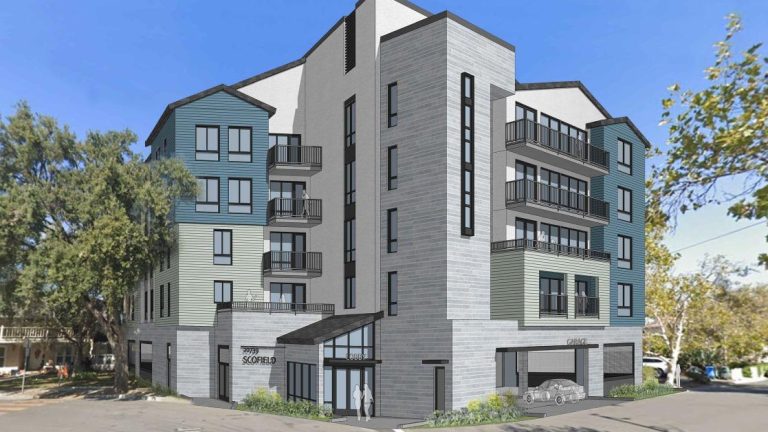
    This proposal is to construct a FIVE story, 20 unit condominium to replace a single family home on Schofield Drive near Faria Elementary School.

    Proposed five-story condominium complex in a single family neighborhood

    The single family home which will be replaced by the five story condominium


    Vista Heights (former McDonald Dorsa quarry)

    This proposal is combining three parcels zoned for Residential Hill Side (RHS) and converting them to a development with 35 homes and a commercial gymnasium. The entry to the complex will be via a road which ends inside Linda Vista Park. The City RHS Ordinance is designed to preserve the natural setting of the hillside and protection from natural hazards like fire & landslides, but it will no longer be applicable since this is a Builder’s Remedy project.

    A similar proposal on this site requesting a General Plan Amendment  had been considered by the City Council in 2019 but did not receive a go-ahead due to the steepness of the land, and the amount of regrading needed to make the plan feasible.

    Neighborhood Impact

    Both these projects are fundamentally altering the nature of the neighborhoods. The Scoffield drive plan is putting a five-story building in the middle of a quiet tree-lined street in a single family neighborhood.

    Street View of Scofield Drive: A quiet residential street

    The Vista Heights project will require significant regrading to carve out building-pads for the 30+ homes, on a steep hill. This will impact the stability of the hill, possibly increasing the risk of landslides and putting neighboring homes at risk. It will also route commercial traffic through Linda Vista Park, coming down a steep sloping road, impacting the safety of the residents, especially children using the park.

    This trend of building five story buildings on single family lots will drive existing homeowners out of Cupertino and also discourage future single family  home buyers from Cupertino. Cupertino homes demand a premium pricing, and new buyers will be reluctant to pay that premium if the lot next door can be converted into a five story condominium.

    What Can We Do?

    These projects serve as a reminder of the risk to our quality of life when our city council does not represent the interests of existing residents, but prioritizes maximizing the profits of real estate developers.

    For the time-being, the city will not be required to accept any new Builder’s Remedy projects since the Housing Element Plan has been accepted by the HCD. However, there are other laws which can lead to similar construction (eg: SB10 which allows 14 units on a single family lot). A new Housing Element plan will also be required in a few more years.

    The residents of Linda Vista neighborhood are petitioning the City Council to review those decisions, and Scofield residents have actively pushed back against the developer. However, the best way to preserve our neighborhoods is to elect a city council which is not beholden to builders’ interests and will keep existing residents’ interests in mind when developing the city.

  • YIMBY Lawsuit Costs Cupertino

    YIMBY Lawsuit Costs Cupertino

    On January 10, 2024, Cupertino settled a lawsuit filed by California Housing Defense Fund and Yes In My Back Yard (YIMBY) for missing its state-mandated Housing Element deadline. According to YIMBY Law, whose slogan includes “Sue the Suburbs,” about a dozen Bay Area jurisdictions have been sued for missing their housing-element deadlines, including Palo Alto, Burlingame, and the County of Santa Clara.

    YIMBY Law claims that nearly half of Bay Area cities remain out of compliance. Their complaint against Palo Alto drew the ire of residents who commented that the lawsuit is a scam used to raise money by organizations that are “backed by investment firms, developers and real estate lobbies.”

    Total Cost Unknown

    To settle the lawsuit, Cupertino paid YIMBY Law and California Housing Defense Fund, $6,000 and $9,000 respectively. The cities of Cupertino, Palo Alto and Burlingame also hired the law firm Goldfarb & Lipman for their defense. Cupertino has paid its contract attorney tens of thousands of dollars in 2023, but it is unknown as to how much was spent on this lawsuit because the City uses the firm for other housing-related issues. Santa Clara County appears to have used its in-house counsel to defend itself from a similar lawsuit filed by Californians for Homeownership, an organization that is “financed and controlled by the California Association of Realtors.”1

    Environmental Consequences

    As part of the settlement with YIMBY Law and CalHDF, Cupertino agreed to exempt its entire Housing Element from the California Environmental Quality Act (“CEQA”). This saves time and expedites development projects, but silences the public’s environmental concerns. 

    In spite of the financial and environmental costs to the City, Vice Mayor J.R. Fruen, who has been endorsed by YIMBY organizations and represented them in legal cases, was positive about the lawsuit. Via the Mercury News, Fruen stated, “the city is right to welcome the result.” 

    Via San José Spotlight, Councilmember Kitty Moore countered “CEQA involves the public with public disclosure of environmental impacts to mitigate those impacts as possible, and to ultimately keep workers and residents informed and safe.” According to the New York Times, due to semiconductor manufacturing, “Santa Clara County is riddled with 23 toxic Superfund sites, more than any county in the country.” Notably, Councilmember Moore, who uncovered toxic waste at the former Vallco site, championed to have the site remediated in order to protect human health. Her actions spurred the County Department of Environmental Health to force a cleanup. 

    Moore emphasized, “This exemption from CEQA is not a win for anyone.”

    Sources:

  • Cupertino, We Can Do Better: Register to Vote and Vote Regularly

    Cupertino, We Can Do Better: Register to Vote and Vote Regularly

    In a recent article published in The.Ink, Anand Giridharadas interviews Daniel Ziblatt, a scholar and co-author (with Steven Levitsky) How Democracies Die (2018) and Tyranny of the Minority (2023). The interview is thoughtful and worth the read, but the salient point is addressed in the headline, “Want to Save Democracy? Watch Less Cable News; Attend More Town Meetings”. 1

    One to add to the Strengthen Democracy To Do list: vote regularly.

    Why should Cupertino residents vote?

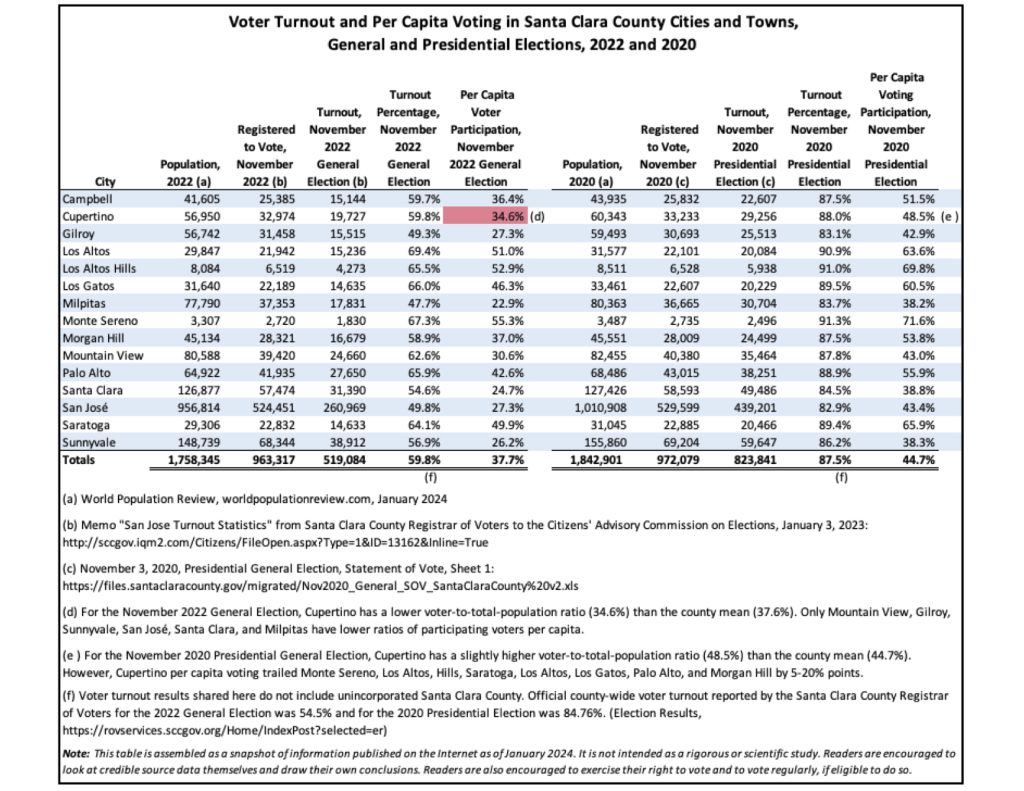
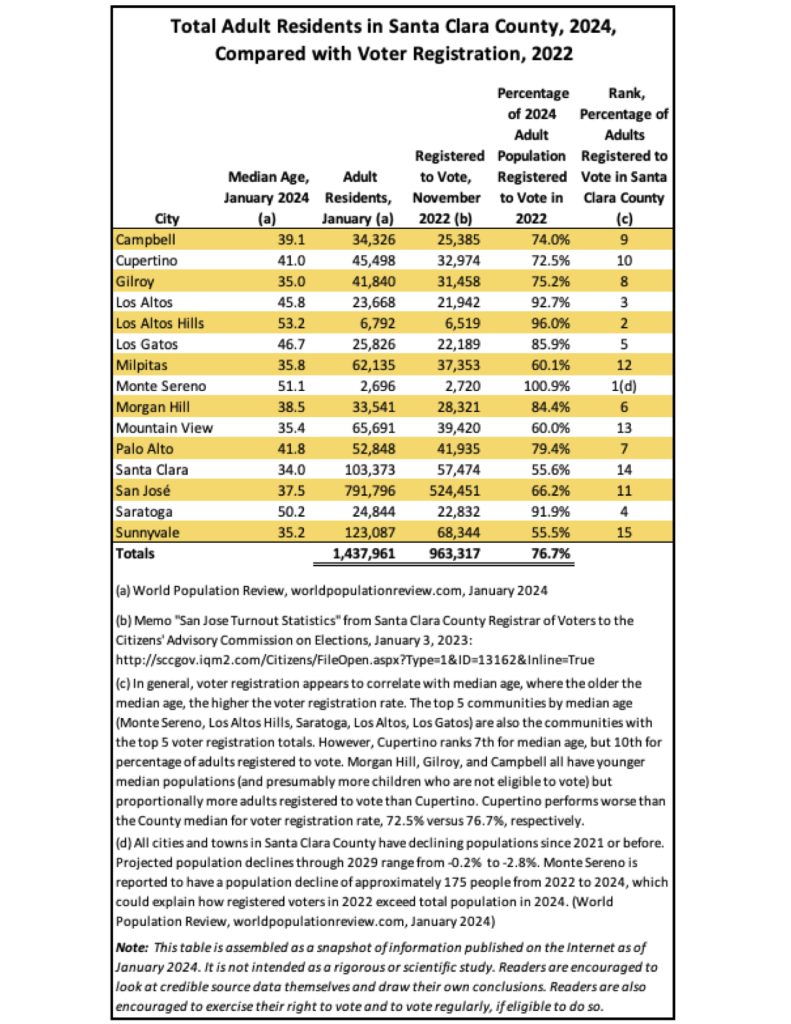
    In Cupertino, approximately 73% of all adult residents are registered to vote. Of the 73% registered to vote, only 60% cast ballots in the November 2022 General Election. Cupertino had a better showing for the November 2020 Presidential Election, with 88% of registered voters returning ballots. However, relative to several nearby communities, Cupertino residents are registered to vote at much lower rates. Residents of Campbell, Gilroy, Palo Alto, Los Altos, Morgan Hill, Saratoga, and others have better voter registration rates than Cupertino.

    When we choose not to vote, we lose our voices. In 2024, the rest of Cupertino joins the small sliver of the city that is part of California Senate District 13. CA SD-13 is centered in San Mateo County, where 84% of eligible adults were registered to vote for the November 2022 General Election.2 As Cupertino joins CA SD-13, we participate at a reduced capacity when our residents cannot be counted on to deliver votes or other campaign support for candidates on par with other CA SD-13 communities.3

    Your vote makes a difference!

    In 2018, 45 votes separated two candidates in Cupertino with very different political platforms and bases of support: one was elected to Council and the other was not. In 2022, the race for the Sunnyvale District 3 Council Member seat was decided by a draw by the County Registrar of Voters after two recounts confirmed a tie between the two candidates.

    When we vote, we support democracy by ensuring that the winning candidates or measures are the ones with the broadest possible support. When voters sit out an election, we risk the total number of “non-voting” registered voters will be greater than the actual votes received by winning candidates, especially for local elections that do not have a primary.

    March 5, 2024 Primary Presidential Election

    The Santa Clara County Registrar of Voters commits to sending vote-by-mail ballots for the March 5, 2024 Presidential Primary Election to all county voters no later than Monday, February 5.

    The March 5, 2024 election includes:4

    Proposition 1, added by the Legislature, that if passed would “[Authorize] $6.38 Billion in bonds to build mental health treatment facilities for those with mental health and substance abuse challenges, [provide] housing for the homeless”

    Primary voting for:

    • US President
    • US Senator
    • US Congressional Representative
    • State Senator (odd numbered districts)
    • Member of the Assembly, including AD-26
    • Judgeships and County Central Committees

    If you or someone close to you are eligible to vote, but not yet registered to vote, the last day to register to vote in the March 5, 2024 election is Tuesday, February 20, 2024 (postmarked registration or electronic submission). You may also register on election day by completing a form at a polling location; however, your vote will not be counted until your information is verified.

    Find voter registration information here.

    Not sure if you are registered to vote? Check your registration status, including the name you are registered under, here. You can also sign up to receive notifications from the Registrar of Voters when your completed ballot is returned.

    Take steps in 2024 to strengthen democracy in our community. Step away from the screen and step forward to in-person, community meetings whenever possible. Register to vote or investigate options to become eligible for US citizenship. If already registered to vote, learn about candidates and ballot measures and take time to vote!

    References

    1 – “Want to Save Democracy? Watch Less Cable News; Attend More Town Meetings,” by Anand Giridharadas, The.Ink, 1/11/2024: https://the.ink/p/want-to-save-democracy-watch-less

    2 – “Report of Registration as of October 24, 2022, Registration by County,” Office of the California Secretary of State, accessed 1/24/2024: https://www.sos.ca.gov/elections/report-registration/15day-general-2022

    3 – “Final Maps Report,” We Draw the Lines, 12/26/2021: https://wedrawthelines.ca.gov/final-maps/final-maps-report/

    4 – “March 5, 2024 Presidential Primary Election, List of Offices.” County of Santa Clara, accessed 1/24/2024: https://files.santaclaracounty.gov/2023-10/list-of-offices-03.05.pdf

  • Cupertino Council Majority Moves to Reduce Transparency into Lobbyist Activity

    At the July 6, 2023 City Council meeting, three Councilmembers (Wei, Fruen, and Mohan) approved first round changes weakening Cupertino’s lobbyist registration ordinance. The changes include a provision that allows lobbyists who are paid less than $5,000/quarter to avoid publicly disclosing their activity. Councilmembers Moore and Chao opposed the changes.

    Cupertino’s Lobbyist Ordinance: A Brief History

    In February 2021, the Cupertino Council enacted an ordinance that requires lobbyists to publicly disclose their activities. The term “lobbyist” included individuals, media, businesses, and select organizations that attempt to influence the government in exchange for paid compensation. This ordinance provides transparency to Cupertino residents around lobbying activity, and helps ensure that our city’s democratic processes are not unduly influenced by conflicts of interest. 

    In July 2022, the League of Women Voters Cupertino Sunnyvale (LWVCS) filed a lawsuit challenging Cupertino’s Lobbyist Registration Ordinance. “When this ordinance was passed, there was no dispute from the League of Women Voters regarding this,” stated Councilmember Kitty Moore during the July 6th, 2023 City Council meeting. “Instead, a lawsuit was filed sometime around July 2022. We’ve now spent over $47K on outside attorney fees, and that is not including the work in the city attorney’s office. In the future, when we have an ordinance, and it’s approved… it would be my preference that an organization/individuals come to the city attorney and council and make the case for why the ordinance needs to be changed.”

    In May 2023, the United States District Court – Northern District of California granted the City’s motion to dismiss the lawsuit. However, by 2023, two new council members that oppose the lobbyist ordinance (Sheila Mohan and JR Fruen) had replaced the former Councilmembers who helped create it (Darcy Paul and Jon Willey). Mayor Wei, a LWVCS officer until just before the League filed its lawsuit against the City, also pivoted her position to oppose the lobbyist ordinance.

    New Council Moves to Limit Lobbyist Ordinance

    The new Council approved first round changes that reduce transparency around lobbyist activity. (Wei, Mohan, and Fruen voted YES; Chao and Moore voted NO) This means:

    • Expenditure Lobbyists will no longer be required to publicly disclose their activity (Expenditure lobbyists are defined as entities who pay others to lobby the City or elected officials on behalf of a position).

    • Media will no longer be required to disclose lobbying activity, regardless of who funds the media activity (Media includes newspapers, newsletters, a radio or television, and Internet publications)

    • Nonprofit and member benefit organizations will no longer be required to disclose their lobbying activity, regardless of who funds the nonprofit organizations.

    • Any lobbyist paid less than $5,000 per calendar quarter will not be required to register as such with the City of Cupertino.

    A Comparison of Local Lobbyist Ordinances

    One justification that staff made for the changes was to bring Cupertino’s lobbying ordinance in line with other local cities, counties, or the state. However, the lobbying ordinances in cities and counties closest to us are actually consistent with Cupertino’s current ordinance. For example, both Santa Clara County’s and San Jose’s lobbyist payment thresholds are $1,000 per consecutive three month period or $5,000 per year for expenditure lobbyists. In-house lobbyists who lobby for 10 hours or more in a consecutive 12-month period must also register.

    During the July 6th meeting, Councilmember Chao disagreed with the usage of the State of California, with its population of 39 million people (via 2022 U.S. Census Bureau estimates), as a benchmark for the City of Cupertino. “For the entire state of California, the limit is $5,000 per quarter. For a tiny city of Cupertino, if the limit is $5,000 per period, I don’t think anyone would ever qualify,” stated Chao. 

    A Loss of Transparency in Cupertino

    The U.S. District Court upholds the 2021 lobbyist registration ordinance, dismissing a lawsuit filed against it by the League of Women Voters Cupertino Sunnyvale. However, the City chooses to disregard the Court’s ruling, and dismantle the ordinance by adding exemptions and raising threshold reporting amounts. 

    From 2021 to 2023, the Cupertino City Council has shifted in sentiment from favoring transparency to shielding lobbyists more than the rest of the county. Failure to provide real accountability, and instead focusing only on partisan political mediocrity, further sacrifices quality governance at the expense of undisclosed pandering.

    To note, Cupertino Facts does not pay any writers, and is driven 100% by the volunteer efforts of Cupertino residents.

    The lobbyist registration ordinance will be discussed by Council again in September 2023.


  • Santa Clara District Attorney Finds No Evidence of Council Member Interference with Staffing Decisions

    Santa Clara District Attorney Finds No Evidence of Council Member Interference with Staffing Decisions

    The Santa Clara Office of the District Attorney has found no evidence for a referral accusing current and former Cupertino City Council Members of interfering with staff hiring and firing decisions. 

    Council Members Kitty Moore and Liang Chao prepare for council meetings by reading the materials and asking questions. They have been accused by the new Council majority of exercising improper conduct in their interactions with current and previous Cupertino City Managers. The DA’s letter confirms that the accusations of criminal conduct are baseless, and it similarly affirms that the insinuations against former Mayor Darcy Paul have “no evidence, documentary or otherwise” to support them.

    The District Attorney refutes Hung Wei’s accusations against her fellow Council Members Kitty Moore and Liang Chao, sent via email to the public on May 21st, 2023.

    “There is no evidence, documentary or otherwise, that any former or current Council Member attempted to influence any of the City Managers in their hiring or firing decisions,” states Deputy District Attorney John Chase in a letter to Cupertino City Attorney Chris Jensen.


    Below is the full letter:


  • Civil Grand Jury Case Consumes Public Resources Scrutinizing Prior Council’s Actions

    From 2018-2022, resident-focused Council Members held a 4-1 majority in Cupertino, ensuring that our local government served the needs and interests of residents first. These Council Members pushed back against those who came to Cupertino intent on maximizing profit with little regard for how their actions impact the people who live here.

    During 2018-2022, the Council worked with City staff to accomplish significant achievements for the benefit of Cupertino residents, including:

    Despite efforts to elect 3 resident-focused Council Members in 2022, campaigns backing financial interest candidates were significantly better funded. Council Member Liang Chao was re-elected, but financial interest candidates prevailed in 2022 and, for now, hold a 3-2 Council majority in Cupertino.

    Resident-focused Council Members Liang Chao and Kitty Moore continue to work hard to advocate for fiscal accountability, transparency, environmental protection, sensible development, and improved transit and City services for residents. They continue these efforts in spite of a work environment made hostile by a Mayor and majority Council who resent sharing the dais with Council members whose legislative priorities and base of support differ from their own. Unlike today’s Council majority, Council Members Chao and Moore neither sought nor received campaign support from financial interests: not from real estate interests, corporations, nor labor unions.

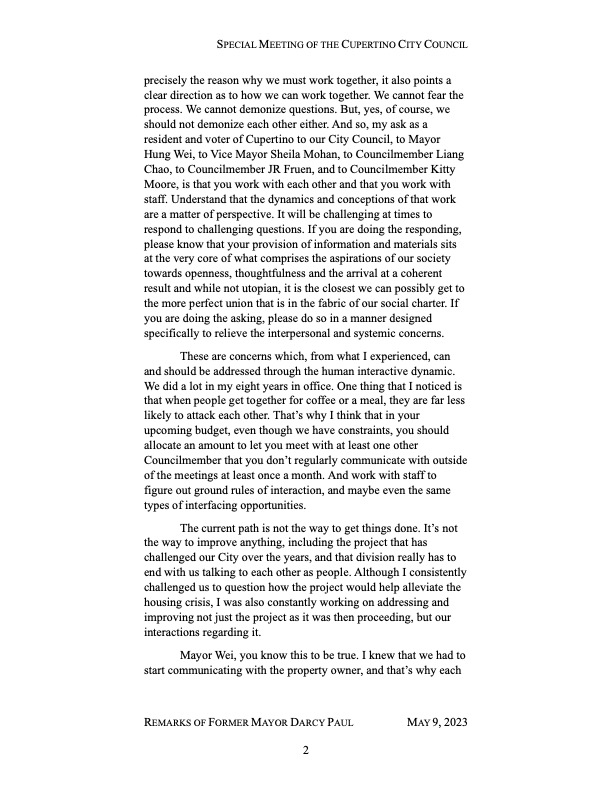
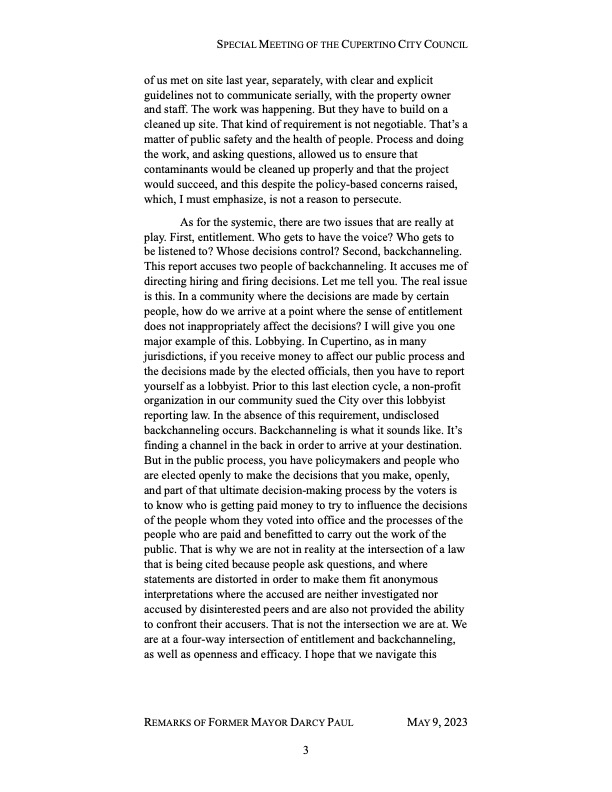
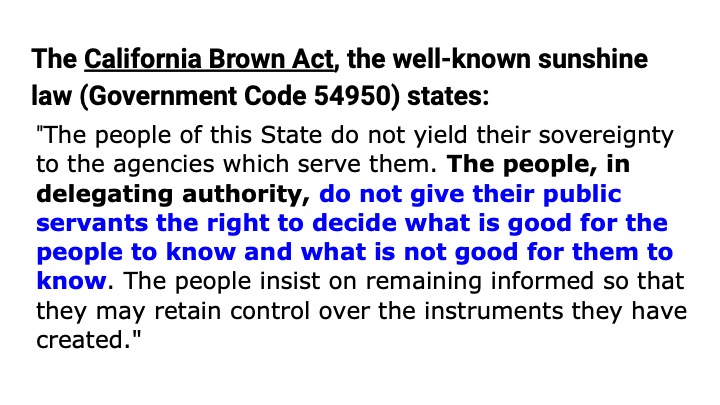
    In 2022, an anonymous individual submitted a complaint to the Civil Grand Jury, Santa Clara County alleging that resident-focused Council Members asked too many questions, wrote too many email messages to staff, made certain staff members “feel threatened”–not to be confused with  threatening staff, which they did not do–, and filed public records requests (a right that is protected by State Law for all persons, including elected officials, under Government Code § 7921).

    Here is the timeline of events that have followed since the complaint was filed, as summarized in the City Attorney’s presentation delivered to Council on 5/9/2023:

    Dec. 19 – Santa Clara County Civil Grand Jury Report released

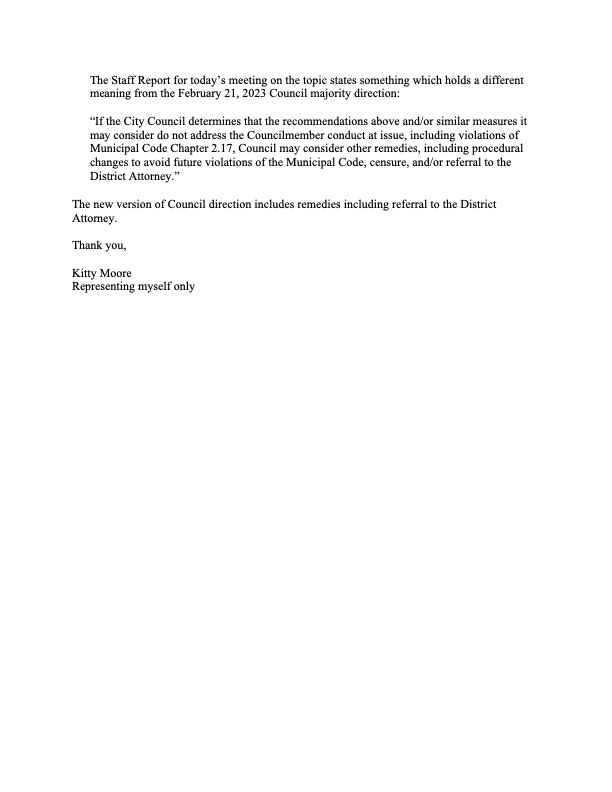
    Feb. 21 – City Council approves response to Grand Jury Report and directs [the Office of the City Attorney] to conduct investigation

    May 2 – City Council votes to waive privilege over independent investigation report

    May 9 – Public discussion of investigation report

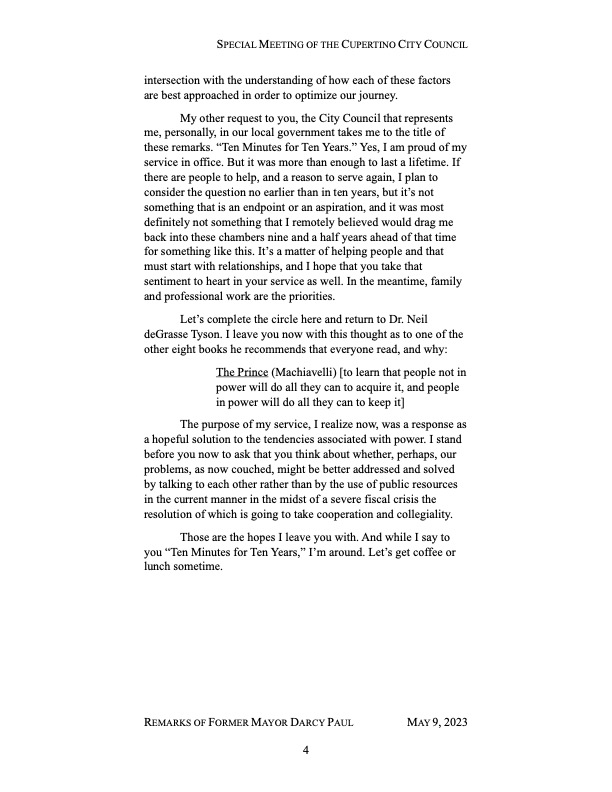
    On 5/9/2023, Council Members Moore and Chao read statements and recused themselves before Council deliberations began, identifying in their comments why they would not participate in a process that exposed them to possible financial and legal consequences. Under the Civil Grand Jury procedure, those accused can neither face their accusers nor review the evidence that the Civil Grand Jury considered to render its decision.

    Council Member Chao also questioned the attorneys present about which Cupertino Municipal Codes specifically that she allegedly violated, as none were cited by section number in either the Civil Grand Jury Report nor in the City-funded investigation summary, the Fact Finding Report. The City Attorney either could not or chose not to answer Council Member Chao’s question directly. Instead, he asserted that the problem rested with the accused Council Members’ perceived “volume and tone of voice,” presumably when asking questions or engaging with staff.

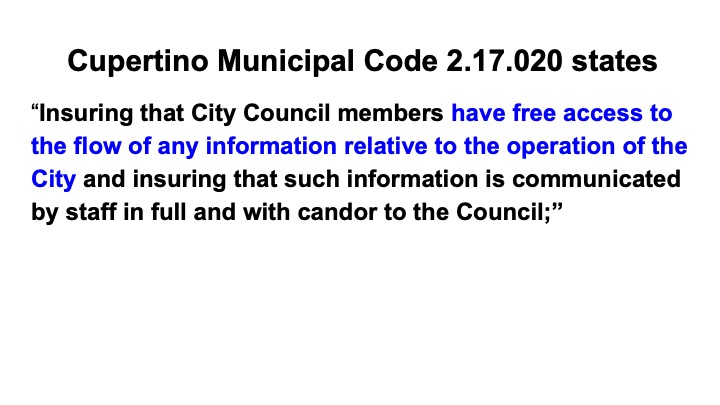
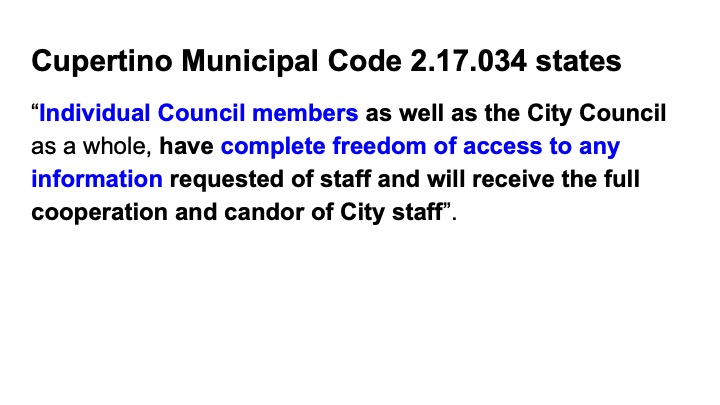
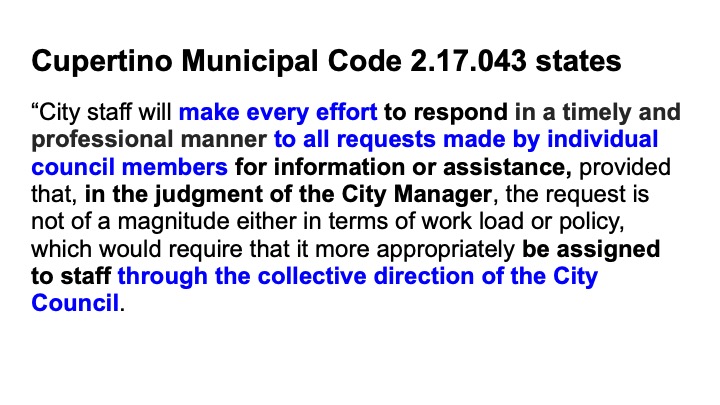
    Council Member Chao cited specific Municipal Code sections which did appear to codify the right of Council Members to ask questions of staff. The Municipal Code also appears to protect staff from overtly burdensome requests from individual Council Members, directing staff to refer the Council Member to the City Manager if questions were to require significant research or communication time. Regrettably, the exchange with the City Attorney resolved with the City Attorney accusing Council Member Chao of “distorting the Municipal Code,” and Council Member Chao asserting that she still does not know which sections of the Municipal Code she is alleged to have violated as none are cited by number in the reports.

    Then, the special interest council majority led by Council Member Fruen voted to remove Council Members Moore and Chao from their committee assignments. 

    It is questionable whether 3 Council Members will adequately represent Cupertino residents on the many City, district, County, and regional boards and committees without assistance from Council Members Moore and Chao. 

    In 4 or 5 months, Council will again revisit the Civil Grand Jury report and reconsider the political consequences the Council majority has imposed on their colleagues. What will have changed?

    For further detail: